
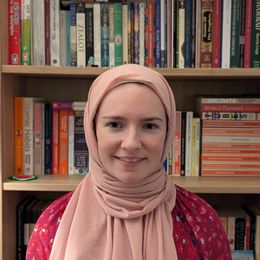
Rochelle Campbell-Esen

 Northumbria University
 What expertise will you bring to AI?
My background spans business management, Business law, and education giving me an unusual lens on AI governance. I’ve analysed regulatory frameworks (UK gender pay gap legislation), taught in schools where I saw AI reshape classroom dynamics firsthand, and conducted hands-on research with marginalised communities. Most recently, I ran workshops with Muslims in the UK to understand how AI development excludes their perspectives and needs. I’ve also worked on user experience design sprints with Gateshead Council and Virgin Money, learning how institutions struggle to implement AI responsibly. What I bring is the ability to bridge technical systems, legal frameworks, and lived experience particularly for communities that AI often harms or ignores.
Research Interests
I want to understand how social media algorithms systematically harm religious minorities, and what meaningful accountability looks like under the Online Safety Act 2023. My specific focus is on how recommendation systems amplify misinformation about Muslim communities, creating consequences from online hate speech to real-world violence. I see this as a technical problem (how algorithms work), a legal problem (what regulation can achieve), and a design problem (who gets to shape these systems). I’m interested in AI as both the source of harm and a potential tool for detection and intervention, but I’m sceptical about technological solutionism.
What made you want to apply for CCAI?
CCAI’s focus on citizens, not just users or consumers, is what drew me. Too much AI research treats people as data points rather than stakeholders with agency. We need to design AI systems with, not for, people. The first year’s structure appeals because I need stronger technical foundations before I can rigorously analyse how algorithms cause harm. I also need space to test whether my current research direction holds up under scrutiny or whether I’m chasing the wrong questions.
What are your ambitions for AI? How do you plan to change the world?
I want to produce research that makes it harder for tech companies to dodge accountability. Specifically, I aim to document how algorithmic systems harm religious minorities in ways that violate existing law, making the case for stronger enforcement and smarter regulation. Four years from now, I want to be someone policymakers and civil society organisations consult when they’re trying to translate lived harm into technical requirements. Long-term, I want to contribute to AI governance frameworks that centre the communities most likely to be harmed but not through tokenistic inclusion. I strive for genuine global redistribution of power in design processes that includes everyone.
Selected Publications
2026
Co-Designing Islamic AI Ethics: Insights from the UK Muslim Community
Rochelle Campbell-Esen, Jamie Mahoney, Reem Talhouk
This list includes items automatically linked to authors from OpenAlex.org, and could contain mistakes.